When I first encountered a magnificent imperial topaz some thirty years ago, I was struck by its extraordinary fire and brilliance. Today, topaz remains one of the most versatile and beloved gemstones in both antique and contemporary pieces.
Topaz deserves recognition as one of nature's most remarkable gemstones. Its incredible range of colours, exceptional clarity, and impressive hardness have made it a favourite amongst jewellers throughout history. Whether you're drawn to the regal glow of imperial topaz or the serene depths of blue varieties, understanding this gemstone's unique characteristics will deepen your appreciation for its timeless appeal.
Understanding Topaz: Nature's Rainbow Gemstone
Topaz gemstone specimens display an extraordinary spectrum of colours, from colourless through yellow, orange, pink, and blue. This remarkable variety stems from trace elements present during the crystal's formation deep within the earth. Pure topaz is actually colourless, but minute amounts of chromium create pink hues, while iron produces yellow and brown tones.
The gemstone ranks 8 on the Mohs hardness scale, making it highly durable for everyday wear. This resilience, combined with topaz's excellent clarity, explains why Georgian and Victorian jewellers favoured it for both elaborate parures and delicate everyday pieces.
Interestingly, topaz exhibits perfect cleavage in one direction, meaning it can split cleanly along specific planes. Skilled lapidaries have long worked with this property rather than against it, creating stunning cuts that maximise the stone's natural brilliance whilst respecting its crystalline structure.
The Majesty of Imperial Topaz
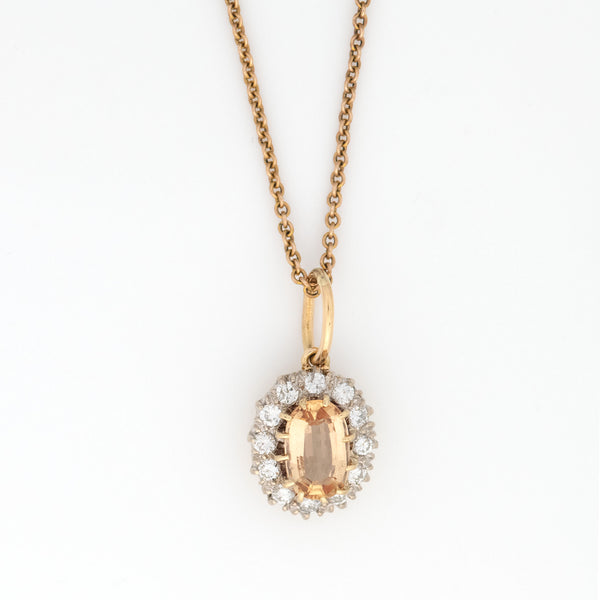
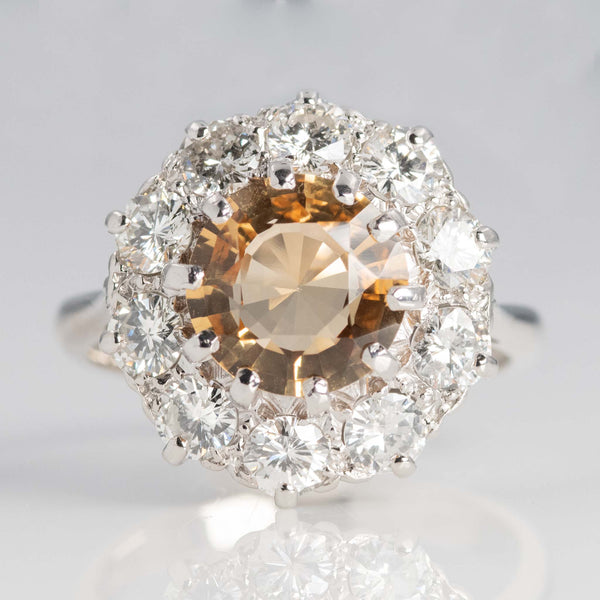
Imperial topaz represents the aristocracy of the topaz family. These precious stones display colours ranging from golden yellow through orange to pink, often with a distinctive peachy or sherry-like hue that seems to glow from within. The name "imperial" originated during the 19th century, when these exceptional stones were particularly prized by Russian royalty.
Brazil's Ouro Preto region remains the primary source of true imperial topaz, producing stones of exceptional quality and size. The finest specimens exhibit a rich, saturated colour with excellent transparency and minimal inclusions. In antique jewellery, imperial topaz often appears in substantial sizes, as Victorian and Edwardian jewellers celebrated the gemstone's ability to be cut into impressive proportions without sacrificing brilliance.
The value of imperial topaz has increased significantly over recent decades, making antique pieces containing fine specimens particularly desirable. When examining imperial topaz in period jewellery, look for stones with strong colour saturation and good clarity, as these qualities were just as prized by past generations as they are today.
Pink Topaz: From Pale Blush to Deep Rose
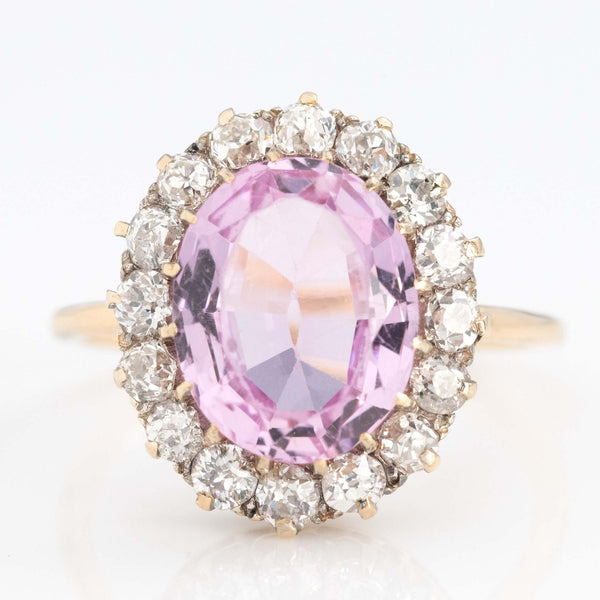
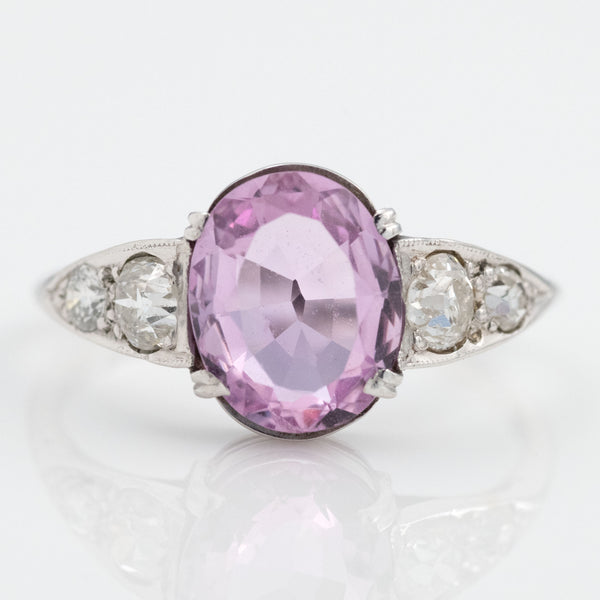
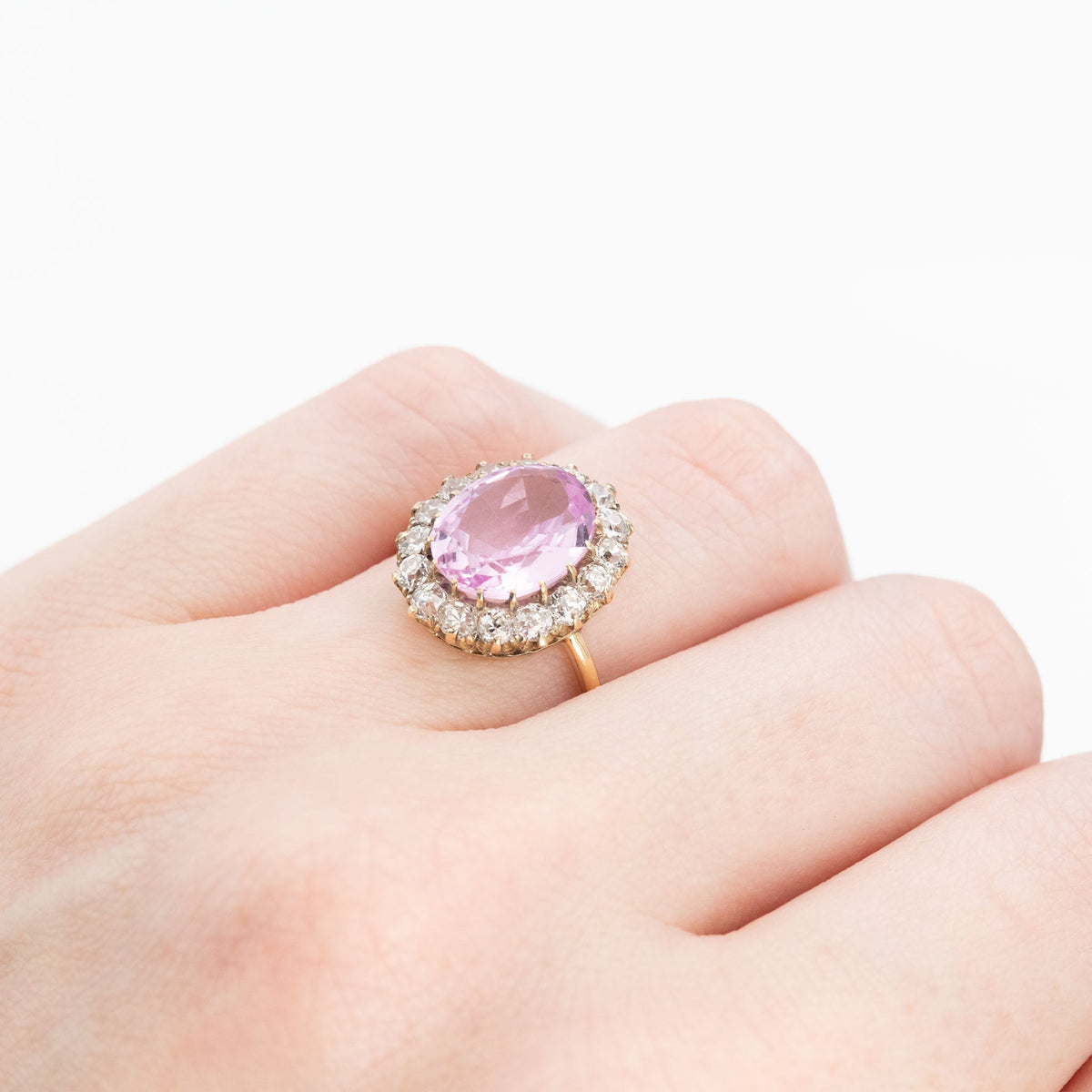
Pink topaz ranges from the most delicate blush tones to rich, saturated rose hues, making it one of the more romantically appealing members of the topaz family. Truly natural pink topaz is among the rarest of all topaz varieties, found primarily in Brazilian and Russian deposits, though many pink stones in circulation have been produced through heat treatment of orange or yellow material. Antique examples are particularly prized precisely because their colour is overwhelmingly natural, untouched by modern enhancement techniques.
During the 19th century, pink topaz enjoyed considerable favour among jewellers and collectors alike, its warm rosy tones lending themselves naturally to the sentimental aesthetic of the Victorian era. Stones were frequently cut into oval or cushion shapes to preserve their colour depth and set in yellow or rosy gold mounts, often accompanied by seed pearls or small diamonds. The colour's association with romance and femininity made pink topaz a popular choice for betrothal and anniversary gifts throughout the period.
When evaluating antique pink topaz, collectors should note that natural stones tend towards softer, slightly peachy or mauve-inflected pinks rather than the vivid, pure rose of treated modern examples. Surface-reaching inclusions and subtle colour zoning, rather than detracting from value, can serve as markers of authenticity and period origin. These gentle imperfections tell the story of a stone formed without intervention, adding a quiet integrity that resonates with those drawn to genuine antique materials.
Blue Topaz: From Sky to London Hues
Blue topaz encompasses a spectrum of blue shades, from the palest sky blue to deep London blue varieties. Whilst naturally occurring blue topaz exists, most blue stones in modern jewellery have been treated to enhance or create their colour. However, many antique pieces feature naturally pale blue topaz, which was particularly popular during the Georgian period.
The subtle beauty of natural blue topaz made it an ideal choice for daytime jewellery in the 18th and 19th centuries. These stones were often cut in elegant emerald or cushion shapes and set in delicate gold or silver mounts. The gentle blue tones complemented the refined aesthetic preferences of the era whilst providing durability for regular wear.
When collecting antique blue topaz pieces, natural stones typically display a softer, more muted blue compared to their treated modern counterparts. This subtle difference adds to their charm and historical authenticity, making them particularly appealing to collectors who appreciate the genuine materials used by period craftsmen.
Identifying Quality and Authenticity
Understanding the properties of topaz helps distinguish genuine stones from imitations and treatments. Natural topaz feels distinctly cool to the touch and exhibits characteristic optical properties that trained eyes can recognise. The stone's high refractive index creates exceptional brilliance, whilst its low dispersion produces less fire than diamonds but more subtle colour play.
Clarity varies considerably in topaz specimens. The finest stones appear virtually flawless to the naked eye, whilst others may contain characteristic inclusions that actually help confirm their natural origin. In antique jewellery, slight inclusions rarely detract from a piece's value, particularly when the stone displays good colour and proper proportions.
Size can be remarkable in topaz specimens, as the mineral readily forms large, clean crystals. Period jewellers took advantage of this characteristic, creating dramatic pieces featuring substantial topaz centrepieces. When evaluating large topaz stones in antique settings, consider the overall proportions and mounting quality alongside the stone's individual merits.
Topaz Through the Ages: Historical Context
Throughout history, topaz has held special significance across different cultures and periods. Ancient Egyptians believed the golden varieties contained the power of Ra, their sun god, whilst medieval Europeans thought topaz could dispel enchantments and calm anger.
During the Georgian era, topaz enjoyed particular favour in closed-back settings that enhanced colour intensity. Victorian jewellers embraced the stone's versatility, incorporating it into everything from modest brooches to elaborate tiaras. The Edwardian period saw topaz used in delicate platinum settings that emphasised the stone's clarity and brilliance.
Many famous topaz specimens reside in museum collections worldwide, testament to the gemstone's enduring appeal. These historical pieces demonstrate how skilled craftsmen throughout the centuries have celebrated topaz's natural beauty through thoughtful design and expert setting techniques.
Celebrating Topaz
Topaz continues to enchant collectors and jewellery enthusiasts with its remarkable range of colours and exceptional clarity. From the warm glow of imperial varieties to the serene beauty of blue stones, topaz offers something for every taste and occasion. Its durability ensures that antique topaz pieces retain their beauty across generations, making them both stunning to wear and wise investments.
Understanding topaz's unique characteristics enhances appreciation for the skilled craftsmen who created historical pieces featuring these magnificent stones. Whether you're drawn to a Georgian paste setting or an Edwardian platinum mount, topaz gemstones bring their own special magic to any collection.
Explore our carefully curated collection of antique and vintage pieces featuring exceptional topaz specimens, each selected for its quality, beauty, and historical significance.