
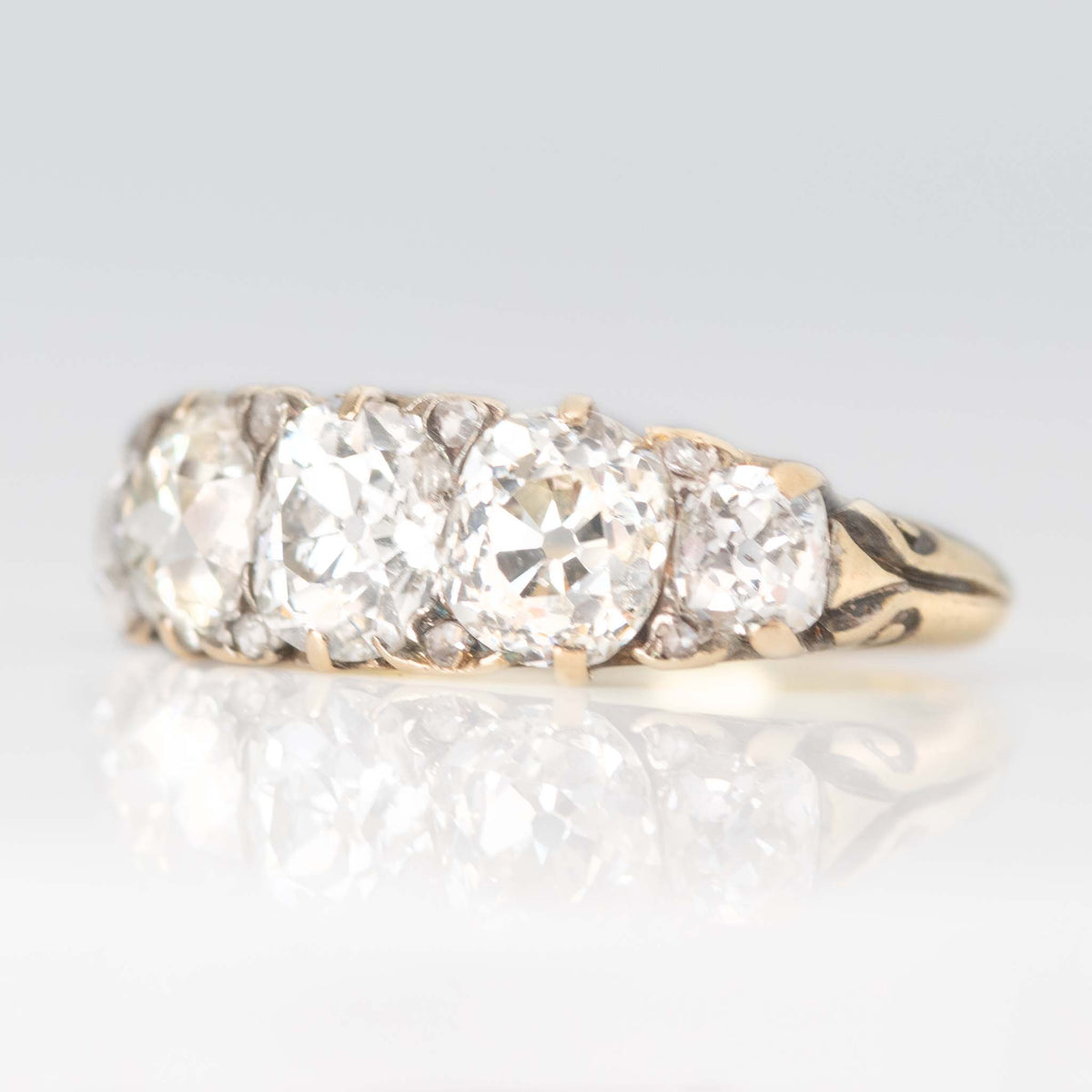
When searching for the perfect engagement ring, few choices capture the essence of timeless romance quite like Victorian engagement rings. These extraordinary pieces, crafted between 1837 and 1901 during Queen Victoria's reign, represent an era when jewellery was deeply symbolic and exquisitely crafted by hand.
The Victorian period witnessed three distinct phases of design, each reflecting the social and cultural shifts of the time. From the romantic symbolism of the early period to the dramatic mourning jewellery of the mid-era, and finally the lighter, more delicate designs of the late Victorian age, these rings offer a fascinating glimpse into history whilst providing stunning symbols of modern love.

Understanding Victorian Ring Characteristics
Victorian engagement rings possess distinctive features that set them apart from other antique pieces. The craftsmanship of this era emphasised intricate metalwork, with rose gold and yellow gold being particularly favoured materials. White gold wasn't available during the Victorian period, so any piece claiming Victorian provenance in white gold should raise immediate questions about authenticity.
The settings themselves tell a story of the era's technological advances. Early Victorian rings often feature closed-back settings, whilst later pieces began incorporating open-back designs that allowed more light to enhance gemstone brilliance. Hand-engraving was commonplace, with delicate patterns adorning ring shanks and settings in ways that modern machine production simply cannot replicate.
Gemstone cuts from this period are particularly distinctive. You'll encounter old mine cuts and old European cuts in diamonds, both hand-cut styles that create a softer, more romantic sparkle than contemporary brilliant cuts. These antique cuts were designed to perform beautifully in candlelight, giving them a warm, intimate glow that many modern brides find irresistible.
Assessing Quality and Authenticity
When evaluating antique engagement rings, authentication becomes paramount. Genuine Victorian pieces will show appropriate signs of age and wear consistent with their claimed period. Look for subtle variations in metalwork that indicate hand-crafting rather than machine production.
The hallmarking system provides crucial authentication clues. British Victorian rings should bear appropriate assay marks for their claimed date, though it's worth noting that smaller pieces weren't always required to be hallmarked. Continental European pieces may have different marking systems entirely.
Examine the construction methods carefully. Victorian jewellers used techniques like hand-soldering and filing that create slightly irregular, organic-looking joins and surfaces. Modern repairs should be evident to an experienced eye, and whilst some restoration is acceptable and often necessary for wearability, extensive modern work can significantly impact both value and historical integrity.
Stone settings deserve particular attention. Victorian settings were designed for the gemstone cuts available at the time, so a Victorian mounting containing a modern brilliant-cut diamond suggests either replacement or complete reproduction.
Symbolism and Design Elements
Victorian jewellery is renowned for its rich symbolism, making these pieces particularly meaningful for engagements. Acrostic rings spelled out words using the first letters of gemstone names – REGARD rings using Ruby, Emerald, Garnet, Amethyst, Ruby, and Diamond became especially popular romantic tokens.
Floral motifs dominated Victorian design, with different flowers carrying specific meanings in the elaborate "language of flowers" that Victorians adored. Forget-me-nots symbolised true love and remembrance, whilst roses represented passionate love. These symbolic elements add layers of meaning to vintage engagement rings that resonate with couples seeking something more profound than contemporary designs.
The three distinct Victorian periods each brought characteristic styling. Early Victorian (1837-1860) pieces tend to be romantic and nature-inspired, often featuring yellow gold and coloured gemstones. Mid-Victorian (1860-1880) jewellery reflects the mourning period following Prince Albert's death, incorporating darker themes and jet or black enamel. Late Victorian (1880-1901) rings return to lighter, more delicate designs with increased use of diamonds and platinum.
Practical Considerations for Modern Wear
Purchasing a Victorian ring for contemporary use requires balancing historical preservation with practical wearability. Many antique rings have undergone some restoration over their 120+ year lifespan, and appropriate professional conservation work can actually enhance both durability and beauty.

Consider the ring's structural integrity carefully. Victorian rings were designed for the lifestyle and activities of their era, which differed significantly from modern daily wear. Professional assessment can identify potential weak points and suggest sympathetic reinforcement where necessary.
Sizing antique rings presents particular challenges. Many Victorian rings can be adjusted, but the process requires specialist expertise to preserve the piece's integrity and value. Some techniques used in period construction make resizing impossible without significant alteration, so it's crucial to understand any limitations before purchase.
Insurance and documentation become especially important with antique pieces. Professional appraisal from a qualified gemmologist familiar with period jewellery provides essential documentation for insurance purposes and peace of mind regarding authenticity and value.
Investment Value and Market Considerations
The market for Victorian rings reflects both their historical significance and enduring aesthetic appeal. Rarity, condition, and provenance significantly influence value, with documented history or notable previous ownership commanding premium prices.
Quality of craftsmanship and materials provides the foundation for long-term value retention. Pieces by known Victorian jewellers or bearing prestigious retailer marks often perform particularly well in the market. However, unmarked pieces of exceptional quality and design merit can prove equally rewarding investments.
Market trends show increasing appreciation for authentic period pieces as couples seek alternatives to mass-produced contemporary rings. This growing interest, combined with the finite supply of genuine Victorian pieces, suggests continued strong demand for quality examples.

When you find a Victorian ring that speaks to you, take time to understand its story, condition, and requirements. A reputable specialist dealer will provide detailed information about the piece's history, any restoration work, and ongoing care requirements.
Ready to discover your perfect piece of Victorian romance? Browse Victorian jewellery collection to explore our carefully curated selection of authentic Victorian and antique engagement rings, each chosen for its exceptional quality, historical significance, and enduring beauty.


