Introduction: More Than Meets the Eye
At first glance, an antique gemstone is a beautiful object — a fragment of colour and light, set in precious metal with skill and care. But look more closely, and the surface of that stone opens onto something far deeper: a world of belief, myth, symbolism, and human longing that stretches back thousands of years. The gemstones set into antique jewellery were never merely decorative. They were chosen with purpose, worn with intention, and understood to carry meaning that went far beyond aesthetics.
The Earliest Enchantments: Prehistoric and Ancient Beliefs
The use of gemstones as talismans and amulets predates written history. Archaeological evidence from sites across Europe, Africa, and the Near East shows that gemstones were being worn and buried with the dead as far back as the Palaeolithic period. Ancient peoples experienced certain stones as charged with power — as if the vivid red of a garnet or the sky blue of turquoise was itself a kind of energy, a connection to fire or sky or blood.
Egypt: Gemstones and the Afterlife
No ancient culture used gemstones more deliberately than the Egyptians. Lapis lazuli, imported at great cost from mines in what is now Afghanistan, was associated with the night sky, the gods, and wisdom. Turquoise was associated with Hathor, goddess of love and beauty, and with protection during travel. The famous burial mask of Tutankhamun is not merely a masterpiece of craftsmanship — it is a precisely constructed symbolic object in which every material has meaning.
The Classical World: Gems as Mirrors of Character
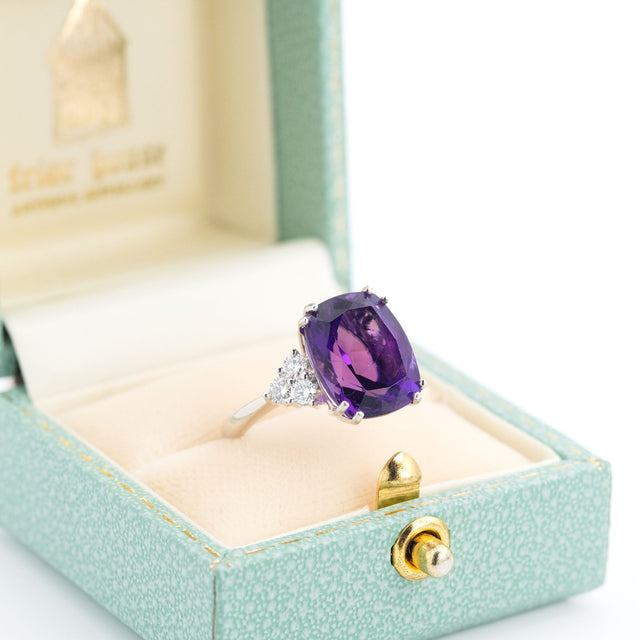
In ancient Greece and Rome, gemstone symbolism became more personalised and philosophical. Classical gem lore held that each stone had specific effects on the character and fortunes of the wearer. Amethyst prevented intoxication and promoted clarity of thought. Sapphire conferred wisdom and divine favour. Emerald was believed to reveal the falseness of lovers. The Roman practice of carving gem portraits (intaglio carving) added another layer of meaning — a carved carnelian ring was also an invocation of the god depicted.
Medieval Europe: Gems and the Christian Cosmos
In medieval Europe, gemstone belief was absorbed into the Christian cosmological framework. The twelve stones of the Breastplate of the High Priest were linked to the twelve apostles, the twelve tribes of Israel, and the twelve months of the year. Medieval lapidaries added physical, spiritual, and medical properties to each stone — beliefs held by educated clergy, physicians, and philosophers alike.
The Victorian Language of Stones
In the Victorian era, gemstone symbolism found one of its most elaborate expressions. Diamonds meant eternal love; rubies expressed passionate devotion; sapphires signified faithfulness; emeralds stood for hope; pearls represented purity and innocence.
Victorian jewellers used gemstones to spell out words in 'acrostic' pieces. A ring set with Ruby, Emerald, Garnet, Amethyst, Ruby, and Diamond spelled 'REGARD' — a complete love message in stone. These extraordinary pieces demonstrate how deeply gem symbolism had penetrated everyday romantic life by the nineteenth century.
Art Deco and the Occult Revival
Even the Art Deco period had its own form of gem enchantment. The period coincided with widespread popular interest in the occult and the mystical traditions of ancient Egypt, following the discovery of Tutankhamun's tomb in 1922. Egyptian motifs in Art Deco jewellery were not merely decorative — for many wearers, they carried the same protective associations they had held in the ancient world.
Discover Your Story at Friar House
Our collection of antique gemstone jewellery spans every major gemstone and every great era of jewellery history — from rich Victorian jewellery to bold Art Deco pieces. Each piece carries its own story of the craftsman who made it, the person who first wore it, and the stone at its heart. Visit us in Battle, East Sussex, or explore our collection online — with free, fully insured worldwide shipping.