
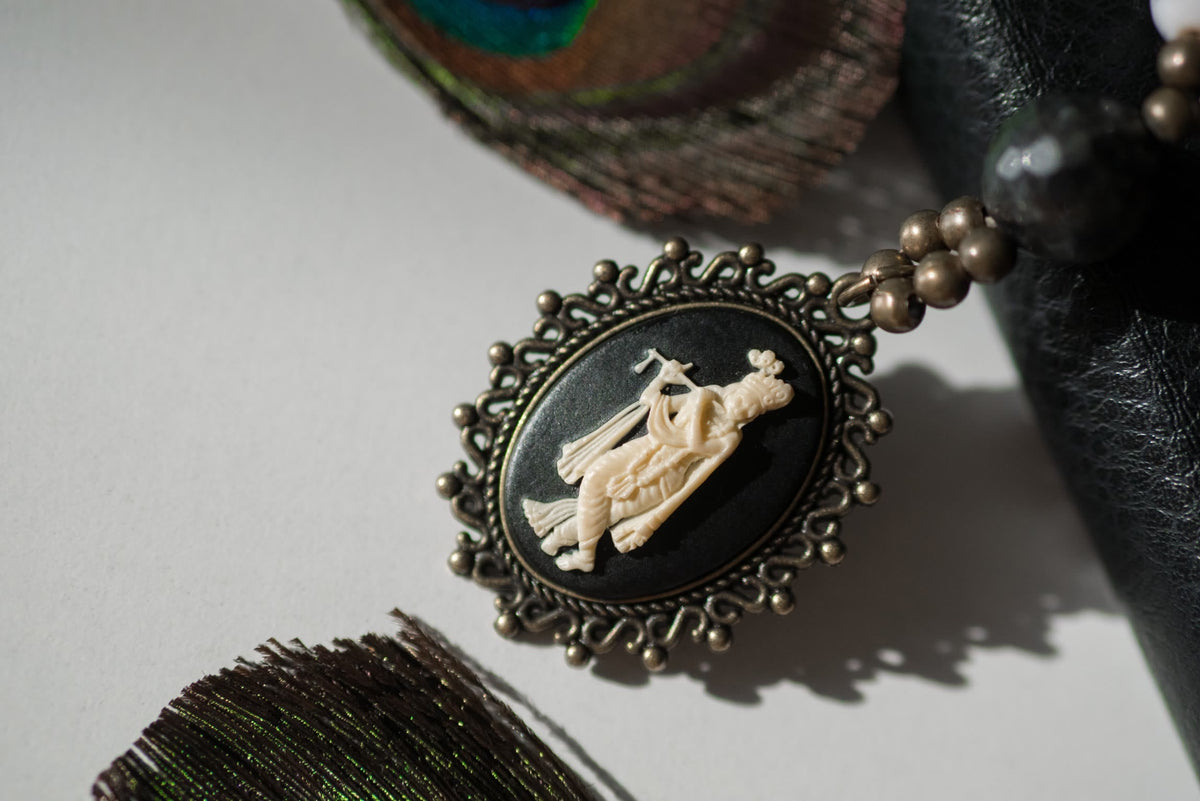
Few objects tell a more intimate story than a piece of mourning jewellery. Worn close to the body and often crafted from deeply personal materials, these pieces reveal how the Victorians approached grief, remembrance, and love. At Friar House, we handle these treasures regularly, and their history never fails to move us.
What Is Mourning Jewellery?
Mourning jewellery refers to pieces made or worn specifically to commemorate the dead. Unlike ordinary adornment, these items carried a dual purpose: they signalled to the world that the wearer was grieving, while also serving as a tangible link to a lost loved one.
The tradition existed long before the Victorian era, with examples found in seventeenth-century England featuring skulls, coffins, and sombre inscriptions. However, it was during the reign of Queen Victoria that mourning jewellery became a widespread cultural practice, touching nearly every household regardless of social standing.
Queen Victoria's Influence on Mourning Customs
When Prince Albert died in 1861, Queen Victoria entered a period of mourning that lasted for the remainder of her life. She wore black for forty years and expected her court to observe strict mourning etiquette.
This royal example filtered down through society. Victorian mourning jewellery became not just accepted but expected, with defined rules about what could be worn during each stage of grief. Full mourning called for the darkest, most restrained pieces, while half-mourning allowed for slightly more decorative touches as the bereaved gradually returned to ordinary life.
Manufacturers responded to this demand at scale. Workshops across Britain produced mourning pieces in vast quantities, ensuring that appropriate jewellery was available to families at every level of income.
The Rise of Antique Jet Jewellery
Among the most recognisable materials of the period is jet, a form of fossilised wood that takes a deep, warm polish when worked by skilled hands. Antique jet jewellery became closely associated with Whitby in North Yorkshire, where local craftsmen built an entire industry around carving the material into brooches, bracelets, and long mourning chains.
Jet's appeal lay in its colour and texture. It was lightweight, warm to the touch, and entirely appropriate for the deepest stages of mourning, when brighter gemstones were considered unsuitable. Cheaper imitations in glass or vulcanite appeared too, though genuine jet remains the most sought-after by collectors today.
Beyond its aesthetic qualities, jet carried genuine practical advantages. It could be carved into intricate, lace-like patterns without becoming fragile, and it took engraving well, allowing dedications and dates to be worked directly into the surface.
Hairwork and the Art of Keeping Someone Close
Perhaps no tradition feels more personal than hairwork jewellery. Victorians frequently incorporated a lock of hair from the deceased into brooches, rings, and pendants, sometimes woven into elaborate patterns visible behind glass, sometimes plaited into chains worn as bracelets or watch guards.
This practice reflected a broader Victorian instinct to preserve something physical of a person after death. Photography was still expensive and not universally accessible, so hair became a durable, personal keepsake that required no special equipment to create at home or commission from a jeweller.
Skilled hairworkers developed remarkable techniques, producing designs that ranged from simple woven bands to detailed floral motifs. Many surviving examples still show extraordinary craftsmanship, a testament to how seriously this form of remembrance was taken.
Memorial Jewellery Beyond Hair and Jet
Not all memorial jewellery relied on hair or jet. Many pieces incorporated enamel work, often in black or white, along with symbolic motifs such as urns, willow trees, forget-me-nots, and clasped hands. These symbols carried specific meanings understood widely at the time, even if they require a little explanation for modern eyes.
Gold mourning rings and brooches frequently included engraved inscriptions naming the deceased and recording dates of birth and death. Some pieces contained small compartments for hair or a miniature painted portrait, blending sentiment with fine craftsmanship in a single small object.
Brooches were particularly popular for mourning purposes, as they could be pinned prominently to clothing and were easily visible as a public sign of respect. Their form allowed jewellers considerable scope for symbolic detail, from carved jet florals to delicate gold edging around a woven hair panel.
A Lasting Legacy
Mourning jewellery fell out of widespread fashion by the early twentieth century, as attitudes towards death and public grief shifted. Yet these pieces have never lost their power to communicate something genuinely human: love, loss, and the desire to remember.
Today, collectors and admirers of antique jewellery value these pieces not just for their craftsmanship but for the stories they carry. Every hairwork brooch or jet pendant represents a real person's grief, made tangible in gold, glass, and stone.
If you're drawn to the history and sentiment behind these pieces, we'd gently encourage you to browse our antique victorian jewellery collection, where Victorian craftsmanship and quiet meaning often go hand in hand.


