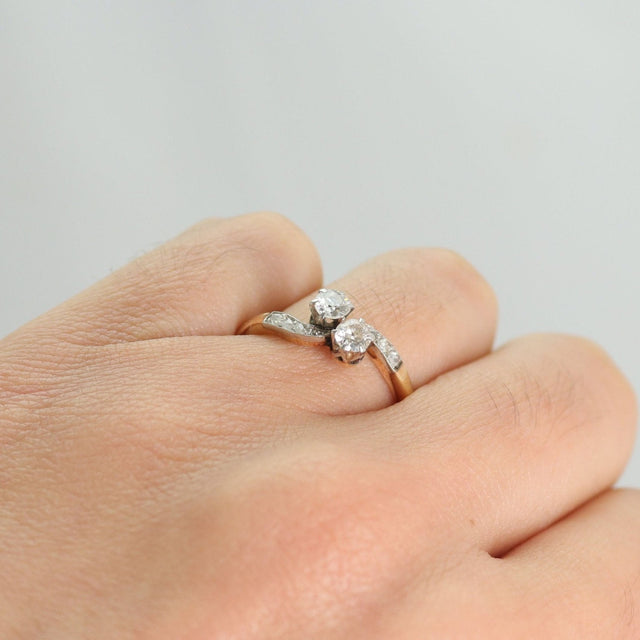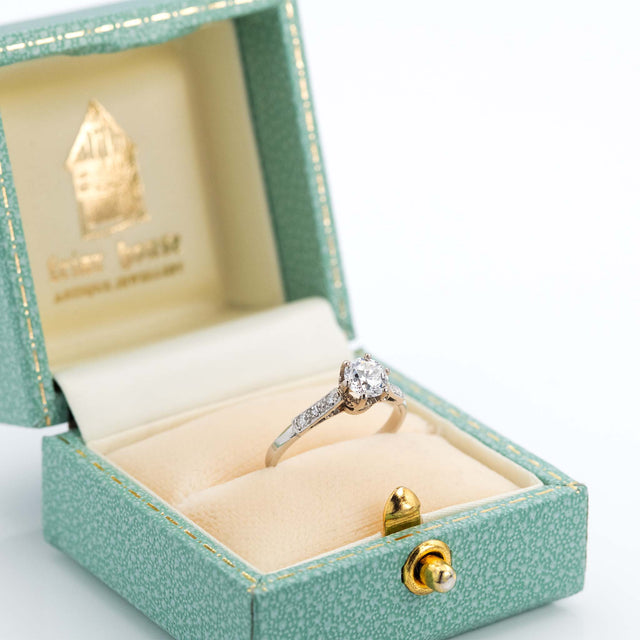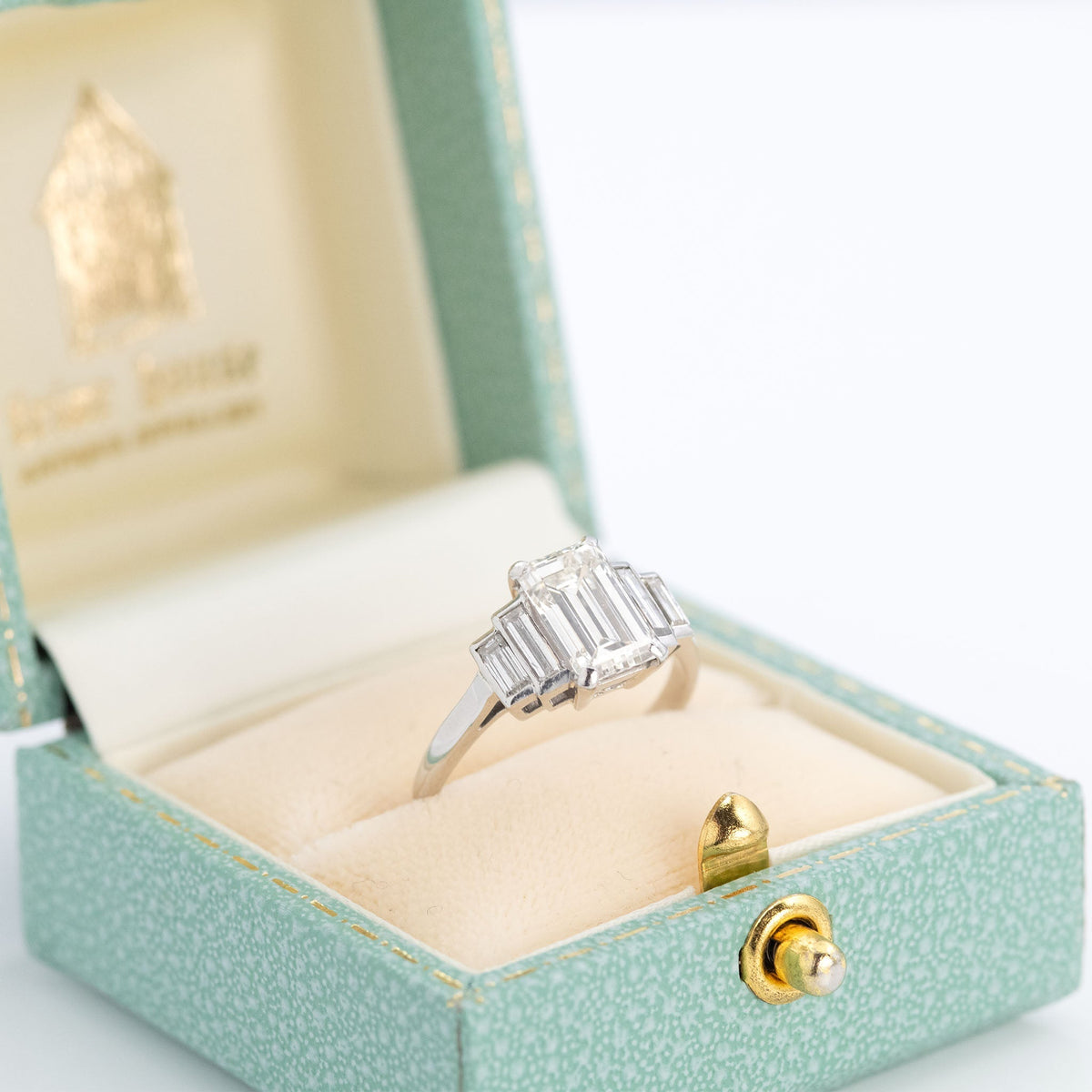
Art Deco Engagement Rings: Glamour and Geometry from the Roaring Twenties
When I hold an Art Deco engagement ring from the 1920s or 1930s, I'm always struck by how these pieces perfectly captured the revolutionary spirit of their era. These weren't just rings—they were statements of modernity, independence, and artistic rebellion. After three decades of handling these extraordinary pieces, I can tell you that art deco engagement rings remain amongst the most sought-after vintage rings for couples seeking something truly distinctive.
The Art Deco movement, flourishing between 1920 and 1940, transformed jewellery design with its bold geometric patterns, striking contrasts, and celebration of machine-age precision. Unlike the flowing, naturalistic designs of the preceding Art Nouveau period, Art Deco embraced sharp angles, symmetrical patterns, and architectural elements that spoke to a new, streamlined world.
What Defines an Authentic Art Deco Engagement Ring
Recognising a genuine vintage deco ring requires understanding the movement's distinctive design language. True Art Deco pieces feature clean, geometric lines—think stepped pyramids, zigzag patterns, and angular motifs inspired by everything from Egyptian archaeology to the Chrysler Building.
The most telling characteristic is the emphasis on symmetry and contrast. You'll often find white diamonds paired with coloured gemstones like sapphires, emeralds, or rubies, creating dramatic visual impact. The settings themselves are architectural marvels in miniature, with stepped shoulders, milgrain detailing, and geometric openwork that allows light to dance through the piece.
Platinum became the metal of choice during this period, prized for its strength and naturally white colour that enhanced diamond brilliance. The craftsmanship is invariably exceptional—these rings were made during the height of traditional goldsmithing skills, just before mass production transformed the industry.
Choosing Your Perfect Art Deco Diamond Ring
When selecting an art deco diamond ring, the centre stone's cut is particularly important. Old European cuts and transitional cuts were popular during the period and possess a warmth and character that modern brilliant cuts often lack. These hand-cut diamonds weren't perfectly round but had their own personality—each one slightly different from the next.
Consider the overall proportion carefully. Art Deco rings often feature elongated designs that create an elegant line on the finger. Emerald cuts, with their stepped facets and geometric appeal, are quintessentially Art Deco, whilst baguette diamonds frequently appear as accent stones in ladder-like arrangements.
The condition of milgrain work—those tiny beaded borders around settings—can indicate how well a piece has been preserved. Original milgrain has a crispness that's difficult to replicate in restoration work. Similarly, examine any openwork or filigree sections for signs of damage or later repair.
Don't overlook the importance of provenance when possible. Rings from established makers like Tiffany & Co., Cartier, or prominent European houses command premium prices but offer assurance of quality and authentic period design.
Understanding Quality and Value in Art Deco Engagement Rings
The value of an art deco ring depends on several interconnected factors. Rarity plays a significant role—whilst Art Deco styling remained popular into the 1940s, the most desirable pieces date from the 1920s and early 1930s when the movement was at its creative peak.
Craftsmanship quality varies considerably within the period. The finest pieces demonstrate extraordinary attention to detail in their construction, with perfectly aligned geometric elements and flawless stone setting. Look for rings where the design flows seamlessly from the centre stone through the shoulders to the band—these represent the pinnacle of Art Deco design thinking.
Size can affect value in unexpected ways. Whilst larger centre stones generally command higher prices, some of the most desirable Art Deco pieces are relatively modest in scale but exceptionally sophisticated in their design execution. A beautifully proportioned half-carat diamond in an architecturally stunning setting can be more valuable than a larger stone in a less distinguished mounting.
Consider the completeness of the design. Many Art Deco engagement rings were created as part of bridal sets, paired with matching wedding bands. Finding complete sets is increasingly rare and significantly enhances value for collectors.
Caring for Your Vintage Art Deco Ring
These remarkable pieces have survived nearly a century, but they require thoughtful care to preserve them for future generations. The platinum settings are generally robust, but the intricate openwork and delicate milgrain details need protection from harsh impacts.
Regular professional cleaning is essential, but avoid ultrasonic cleaners which can loosen stones in period settings. The setting techniques used in the 1920s, whilst skilled, don't always hold stones as securely as modern methods. Instead, gentle cleaning with soft brushes and appropriate solutions will maintain the ring's brilliance without risking damage.
Store your ring separately from other jewellery to prevent scratching, and consider having it professionally inspected annually. The prongs and milgrain work can wear over time, and early detection of any issues allows for conservative restoration that preserves the piece's integrity.
When wearing your ring daily, be mindful of its age. Remove it during activities that might subject it to impact or chemicals. Remember, you're not just wearing jewellery—you're preserving a piece of decorative art history.
Finding Your Perfect Art Deco Engagement Ring
The market for authentic Art Deco engagement rings has remained strong throughout my career, driven by their timeless appeal and increasing rarity. Each piece represents not just exceptional craftsmanship but a tangible connection to one of the most dynamic periods in decorative arts history.
Working with specialists who understand the period's nuances ensures you're investing in a genuine piece rather than a later interpretation. The subtle details that define authentic Art Deco work—from the specific cutting styles of period diamonds to the particular alloys used in settings—require experienced evaluation.
At Friar House, we carefully curate our collection of art deco engagement rings, ensuring each piece meets our standards for authenticity, condition, and design excellence. Every ring tells its own story of the glamorous decade that created it.