
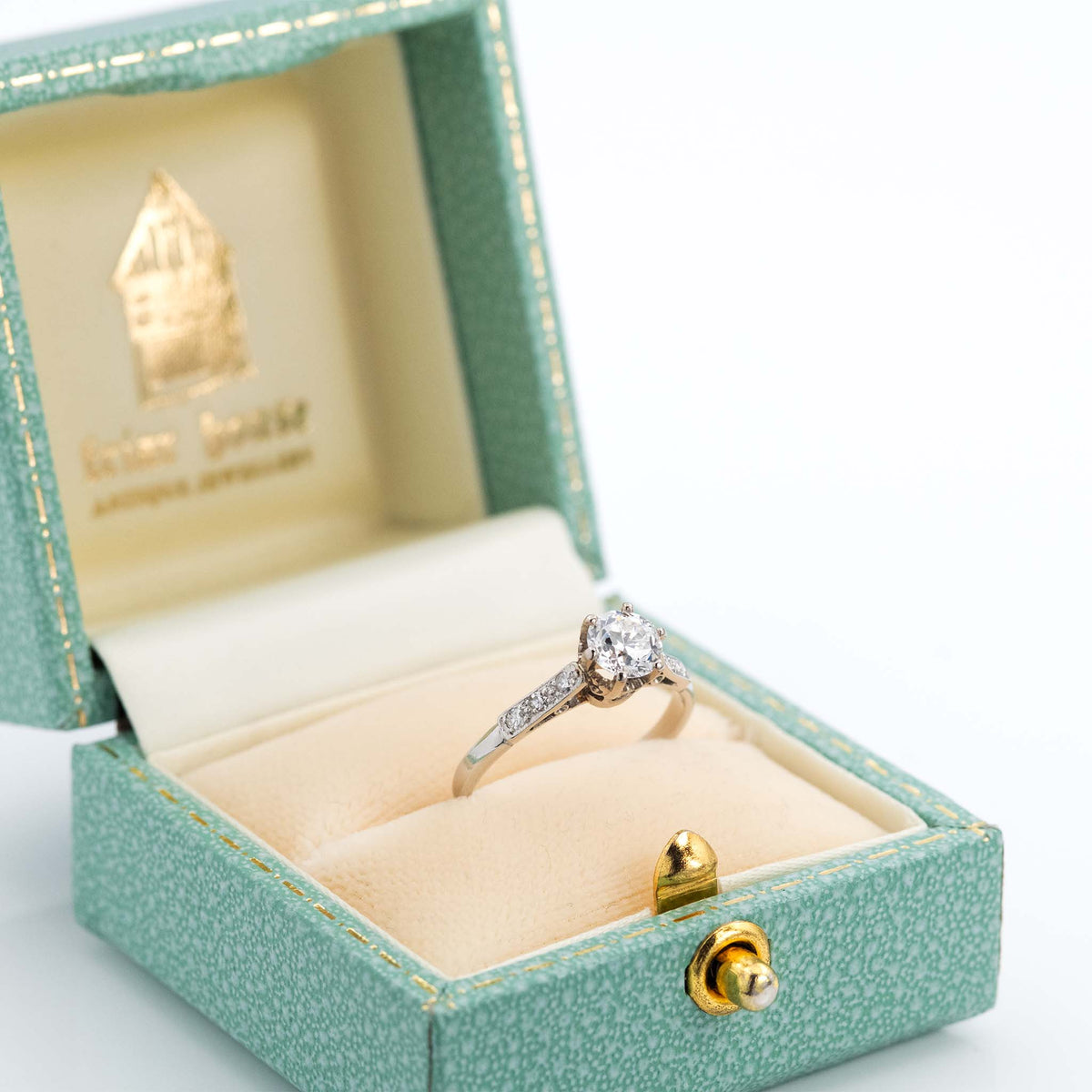
Choosing an engagement ring is exciting, but buying art deco engagement rings takes a little more care than picking something from a modern jeweller's shelf. These rings are anything from 90 to over 100 years old, and each one carries its own history, wear, and quirks. After more than 30 years of handling antique jewellery, I've put together this checklist to help you buy with confidence.
Whether you're new to antique jewellery or you've been searching for a while, knowing what to check before you commit makes all the difference. Let's go through what actually matters.
Understanding the Art Deco Style
Art deco jewellery was made roughly between 1915 and 1935, and it has a distinct look. Expect geometric shapes, symmetry, and bold contrasts, often using platinum or white gold rather than the yellow gold common in earlier Victorian pieces.
Diamonds were cut differently too. Many genuine art deco diamond engagement rings feature old European cut or old mine cut diamonds, which have smaller tables and higher crowns than modern brilliant cuts. This gives them a warmer, softer sparkle rather than the sharp fire of a contemporary diamond.
Knowing these hallmarks helps you spot the difference between a genuine period piece and a later ring made in a similar style. Both can be lovely, but they should be priced and described accordingly.
Checking Authenticity and Hallmarks
One of the first things I do when assessing a ring is look for hallmarks. British antique rings should carry marks indicating the metal purity, the assay office, and often a date letter. These small stamps, usually inside the band, are one of the most reliable ways to confirm age and origin.
A reputable dealer should be able to explain what the hallmarks mean and roughly when the ring was made. If a seller can't or won't discuss this, that's worth noting. When you're buying an antique engagement ring, ask questions, and expect clear answers.
It's also worth remembering that a ring can be altered over time. Shanks get resized, stones get replaced, and settings get repaired. None of this is necessarily a problem, but it should be disclosed. A ring described as "art deco style" rather than "art deco" is usually a signal that it was made later, inspired by the period rather than made within it.
Assessing Diamond and Gemstone Quality
With any antique diamond ring, look closely at the cut, colour, and clarity of the stones, but remember that old cut diamonds don't grade the same way as modern ones. A slightly higher colour grade or a few small inclusions are normal and part of the charm, not necessarily a flaw to avoid.
Ask whether the ring comes with any grading information or a description of the stones' characteristics. Even without a formal certificate, a knowledgeable dealer should be able to tell you the approximate carat weight, the cut style, and anything notable about the setting.
Coloured gemstones such as sapphires and emeralds were also popular in art deco design, often combined with diamonds in contrasting settings. If your ring includes coloured stones, ask whether they're natural or treated, as this affects both value and long-term care.
What Affects Value
Several factors influence the price of antique rings in the UK, and it helps to understand them before you start comparing options. Condition matters enormously. A ring with its original setting, minimal wear, and no significant repairs will usually cost more than one that's been heavily restored.
Rarity plays a part too. Unusual designs, signed pieces from known makers, or rings with larger or finer stones will command higher prices. Provenance, meaning any documented history of the piece, can also add value, though most antique rings on the market don't come with detailed histories attached.
Metal content is worth checking as well. Platinum settings, common in art deco pieces, tend to hold their value well due to both the metal and the craftsmanship involved in working with it. Don't assume a lower price always means better value. Sometimes it reflects a genuine condition issue, and sometimes it simply reflects a smaller stone or simpler design.
What to Avoid
There are a few things I'd encourage any buyer to be cautious about. First, avoid sellers who are vague about age, origin, or condition. Antique rings england buyers should expect specific, honest descriptions, not general claims like "vintage-inspired" when you're expecting a genuine period piece.
Second, be wary of rings advertised with no return policy or no willingness to answer questions before purchase. A trustworthy dealer wants you to feel confident in your purchase, not rushed into it.
Third, watch for over-restoration. A ring that's been heavily reworked may have lost some of its original character and value. Light cleaning and routine maintenance are normal; a completely rebuilt setting is a different matter and should be clearly disclosed.
Finally, don't skip getting the ring properly assessed once it arrives, particularly if you're buying from a distance. A reputable seller will welcome this and should be happy to answer follow-up questions if anything doesn't match the description.
Buying With Confidence
Buying an antique engagement ring should feel like a considered decision, not a gamble. Take your time, ask questions, and look for a seller who's transparent about hallmarks, condition, and stone quality. Genuine art deco engagement rings carry a certain craftsmanship and character that's hard to replicate, and understanding what to look for helps you find a piece that's both beautiful and honestly represented.
At Friar House, every ring is assessed carefully before it's offered for sale, and we're always happy to talk you through the details of a piece before you buy. If you'd like to see what's currently available, browse our selection of art deco diamond engagement rings and get in touch with any questions. We're here to help you find a ring you'll be glad to have chosen.


