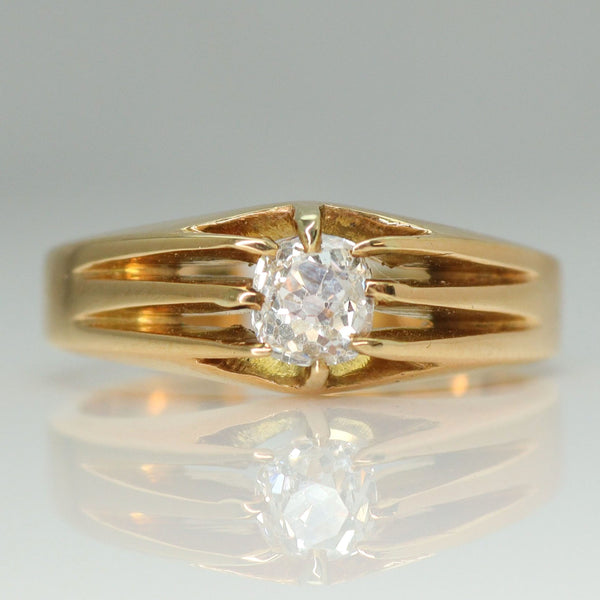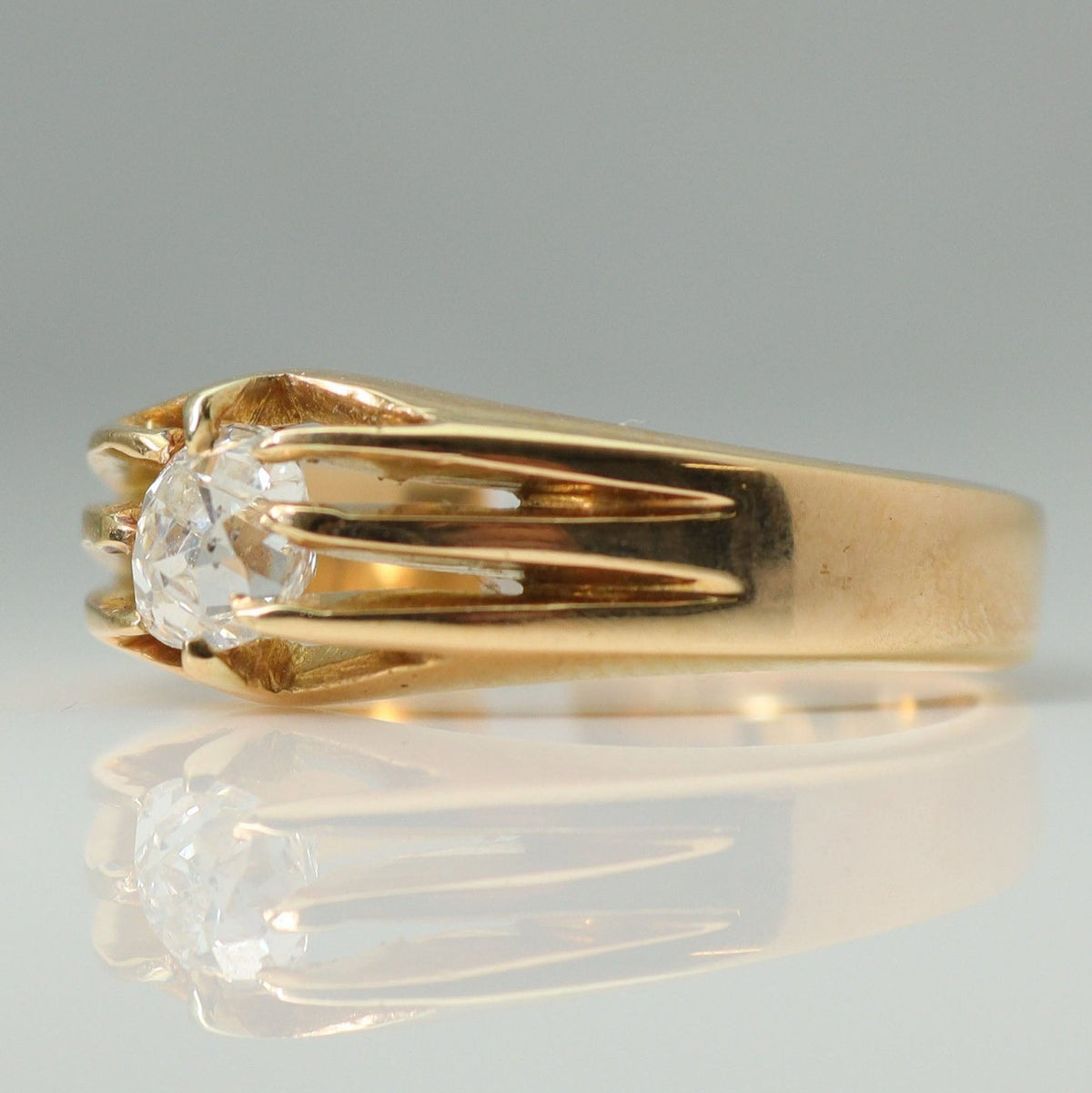
Men have worn rings for as long as jewellery has existed, yet finding a good gents antique ring today takes a little more thought than browsing the high street. Antique men's rings carry genuine history in their gold, and choosing the right one means understanding what you're looking at as much as what you like. After thirty years handling these pieces, I still find something new to admire in every one that crosses my counter.
This guide walks through the main styles you'll encounter, a little of their background, and some practical pointers for choosing a ring that suits you.
The enduring appeal of signet rings history
No discussion of men's antique rings can start anywhere but the signet ring. Signet rings history stretches back to ancient Egypt and Rome, where a carved seal pressed into wax served as a personal signature. By the Georgian and Victorian periods, signets had become a staple of a gentleman's jewellery box, often engraved with a family crest, initials, or a simple monogram.
What makes antique signets so appealing today is that practical origin. They were made to be worn daily, so the gold tends to be substantial and the design uncluttered. A Victorian signet in 18 carat gold has a weight and presence that modern reproductions rarely match. Many still carry their original engraving, which some gentlemen choose to keep as a nod to a stranger's history, while others prefer to have the face re-cut with their own initials.
Georgian and Victorian styles worth knowing
Beyond the signet, Georgian and Victorian jewellers produced a fascinating range of rings for men. Mourning rings, common in the Georgian era, often featured black enamel, seed pearls, or a lock of hair beneath glass, marking the loss of a loved one in a way that was both personal and quietly worn.
Victorian gentlemen also favoured rings set with a single cabochon stone, such as bloodstone, carnelian, or garnet, frequently mounted in heavy yellow gold. These were understated by design. The stone was rarely the star of the show; instead it complemented the ring's overall solidity and craftsmanship. If you're drawn to antique jewellery for men with a bit of colour but without ostentation, this period is a good place to start looking.
Art Deco and early twentieth-century designs
The Art Deco period, roughly the 1920s and 1930s, brought a sharper, more architectural look to men's rings. Geometric patterns, clean lines, and combinations of white gold or platinum with onyx or sapphire became popular among fashionable men of the era. These rings tend to feel more overtly stylish than their Victorian predecessors, which suits gentlemen who like a touch of visual interest without straying into flashy territory.
Slightly later, into the mid-twentieth century, you'll find rings that blend traditional signet forms with the bolder proportions of the period. Vintage men's rings from these decades often sit comfortably alongside modern tailoring, which is part of why they remain so popular with collectors today.
How to choose the right antique ring for you
Choosing a ring isn't only about the period or the style; fit and daily wear matter just as much. Here's what I always encourage customers to consider.
Ring size is the first practical matter. Antique rings, particularly signets, were often sized for hands that were on average slightly smaller than today's, so resizing is common and usually straightforward for an experienced jeweller. Ask before you buy whether a ring has been resized already, as this can affect an engraved crest's alignment.
Gold colour and carat matter for both look and longevity. Georgian and Victorian pieces are typically higher carat, often 18 or 22 carat, giving a warmer, richer colour than the 9 carat gold more common in everyday modern jewellery. If you wear other gold jewellery regularly, it's worth matching tones so everything sits together comfortably.
Condition deserves a careful eye too. Look closely at engraving depth on signets, as decades of wear can soften a crest until it's barely legible. Check that any stones are secure and that enamel work, if present, hasn't chipped. A reputable dealer will always be honest about a ring's condition and any repairs it has had.
Finally, think about how the ring will actually be worn. A hefty Victorian signet suits someone who wants a ring with real presence on the hand, while a slimmer Art Deco band might suit a gentleman who prefers subtlety. There's no right answer here, only what feels right for you.
Wearing antique rings with confidence today
One of the pleasures of men's antique rings is how naturally they sit within contemporary style. A signet worn on the little finger, in the traditional manner, reads as classic rather than old-fashioned. Equally, many gentlemen now wear signets on the third or fourth finger simply because it suits their hand better, and there's no strict rule preventing this.
Antique rings also pair well with modern watches and cufflinks without competing for attention, since the gold tones and understated design tend to complement rather than clash. If you're new to wearing rings, starting with one well-chosen piece, worn consistently, tends to look more considered than several rings worn all at once.
Final thoughts
A well-chosen gents antique ring is more than an accessory. It carries genuine history, craftsmanship from a different era, and, in the case of signets, sometimes a story that predates its current owner entirely. Whether you're drawn to a Georgian mourning ring, a Victorian signet, or an Art Deco design, the most important thing is choosing a piece that feels authentically yours.
If you'd like to see the range currently available, do take a look at our collection of antique and vintage men's rings, where each piece has been personally selected and researched.