
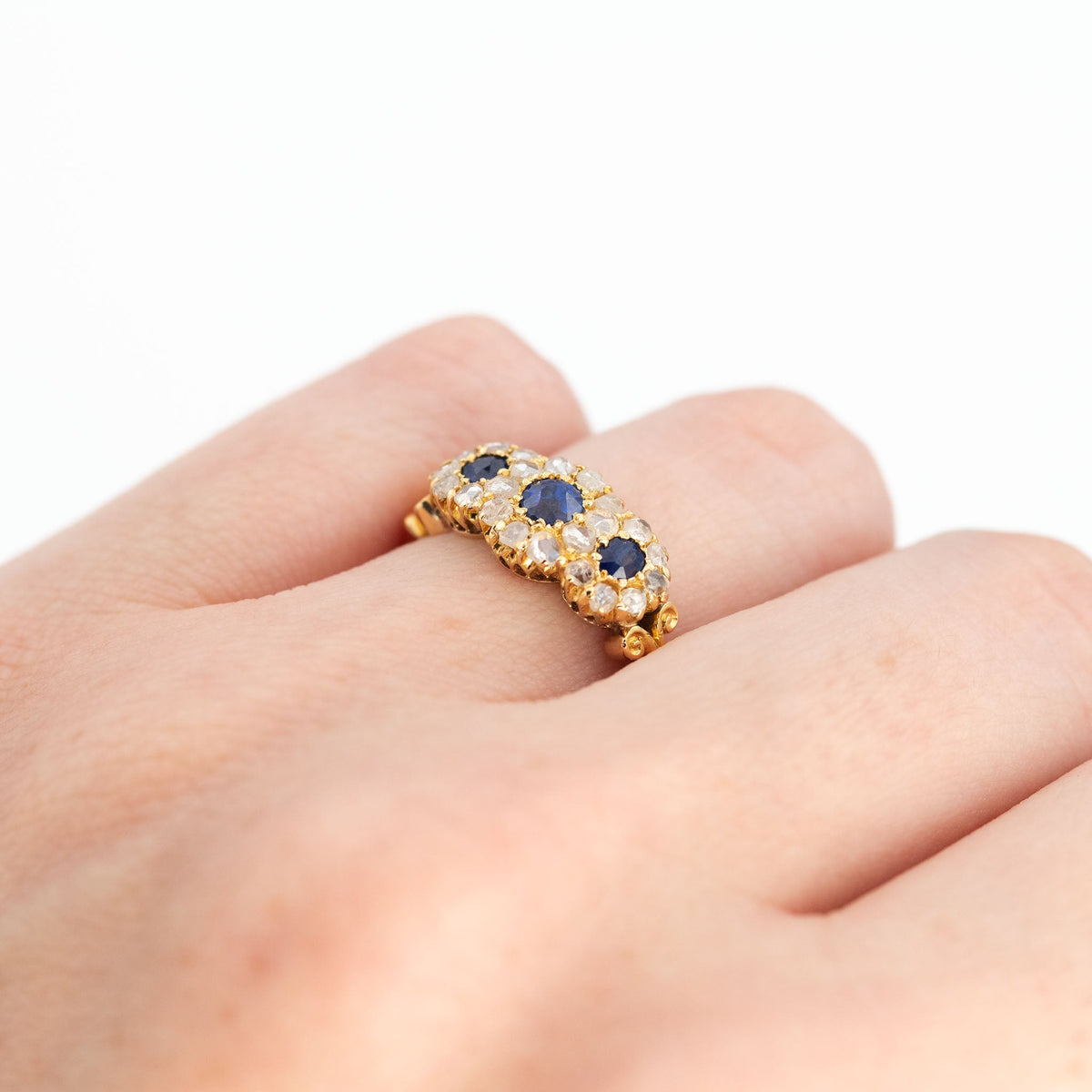
When you first start looking closely at antique rings, the setting often tells you as much as the stone itself. The way a gem is held, whether lifted proudly above the band or nestled flush against the skin, reflects the fashions, skills and priorities of its era. This antique ring settings guide has been put together to help you recognise the main styles you'll encounter, so you can shop with more confidence and appreciate the craftsmanship behind each piece.
Over thirty years of handling antique and vintage jewellery, I've come to love how much a setting reveals about when and how a ring was made. Understanding the different types of ring settings isn't just useful for collectors; it genuinely deepens your enjoyment of wearing these pieces day to day.
What Is a Ring Setting, and Why Does It Matter?
A setting is simply the metalwork that holds a gemstone in place. But the method chosen by a jeweller affects far more than security. It influences how much light reaches the stone, how the ring feels on the hand, and how well it withstands decades of daily wear.
Different periods favoured different settings, partly due to available technology and partly due to taste. Georgian jewellers, for instance, often worked with closed-back settings to enhance the brilliance of candlelit gems, while Edwardian craftsmen embraced delicate, open claw work made possible by advances in platinum. Knowing this helps you date a piece and understand its construction at a glance.
Claw Settings: Letting the Stone Take Centre Stage

Claw setting rings use small metal prongs, usually four or six, to grip a stone around its girdle while leaving most of the surface exposed. This design allows maximum light to enter the gem from all angles, which is why claw settings remain so popular for diamonds and other faceted stones.
Antique claw settings tend to have a handmade character you rarely see in modern mass production. The claws might be slightly uneven, tapered by hand, or shaped into decorative points rather than plain rounded tips. This subtle irregularity is often a good sign of genuine age rather than a flaw to be concerned about.
Claw settings became especially popular from the Victorian era onwards, as jewellers sought ways to showcase increasingly well-cut diamonds. If you're drawn to rings with plenty of sparkle and a sense of lightness, this is usually the setting style to look for.
Bezel Settings: Security Meets Understated Elegance
A bezel setting encircles the stone completely with a thin rim of metal, holding it firmly in place without any visible prongs. Bezel set antique rings have a smooth, streamlined profile that feels wonderfully tactile and practical for everyday wear.
This style has ancient roots and was particularly favoured during the Georgian and early Victorian periods, when closed-back bezels also served to protect foiled or paste stones from moisture and damage. Later bezel work often left the back open, allowing more light through while still offering excellent protection for the stone's edges.
Because the metal fully surrounds the gem, bezel settings are generally more resistant to knocks than open claw designs. If you lead an active lifestyle or simply prefer a subtler, more architectural look, a bezel setting is well worth considering.
Cluster Settings: A Celebration of Pattern and Colour
Cluster rings group multiple stones together, typically with a larger central gem surrounded by smaller ones, to create a single, unified design. Antique cluster ring styles vary enormously, from tightly packed diamond clusters of the Georgian period to colourful Victorian arrangements mixing sapphires, rubies and seed pearls.

What makes cluster settings so appealing is the way they play with scale and light. A cluster ring can appear far more substantial than the sum of its individual stones, making it a favourite for engagement rings and statement pieces alike. The surrounding stones also protect the central gem to some extent, echoing the practical thinking behind bezel work.
If you're new to collecting, clusters are a wonderful place to start exploring, since they showcase several types of ring settings working in harmony within one piece. You can browse our antique cluster rings collection to see this variety for yourself.
Channel Settings: A Ribbon of Seamless Brilliance
Channel settings secure a continuous row of gemstones side-by-side between two parallel walls of precious metal, creating a smooth, unbroken stream of light. This technique became highly prominent during the Art Deco era and remains a hallmark of elegant eternity bands, perfectly suited for showcasing geometric cuts like baguette, square, or round brilliant diamonds.

What makes channel settings so appealing is their clean, architectural symmetry and unmatched wearability. Because the stones are recessed slightly beneath the metal borders, they are entirely shielded from everyday impact and scratches, making this style a favorite for active lifestyles and wedding bands. The absence of individual prongs ensures a snag-free design that celebrates the pure geometry of the stones rather than the metal holding them.
If you are looking for a piece that balances modern sleekness with exceptional security, channel settings offer a timelessly practical option. You can browse our antique and vintage eternity bands collection to see how this streamlined technique elevates classic jewelry design.
Choosing the Right Setting for You
There's no single "best" setting; it really depends on your lifestyle, taste and how you intend to wear the ring. Claw settings suit those who love maximum sparkle and don't mind a little extra care around delicate prongs. Bezel settings work beautifully for daily wear and a more contemporary, streamlined look, even on a genuinely antique piece.
Cluster designs offer versatility and visual richness, often at a more accessible price point than a single large stone of equivalent presence. Whichever style catches your eye, it's worth examining the setting closely, checking for wear, security and any past repairs, before making your decision.
Bringing It All Together
Understanding claw, bezel and cluster settings gives you a genuinely useful framework for exploring antique rings, whatever era or budget you have in mind. Each style tells its own story about the period it came from and the hands that shaped it. I hope this antique ring settings guide has given you a clearer sense of what to look for, and perhaps a little more appreciation for the craftsmanship behind every piece.
If clusters have caught your imagination, I'd warmly invite you to browse our antique cluster rings collection and see the variety of styles, stones and periods on offer.


