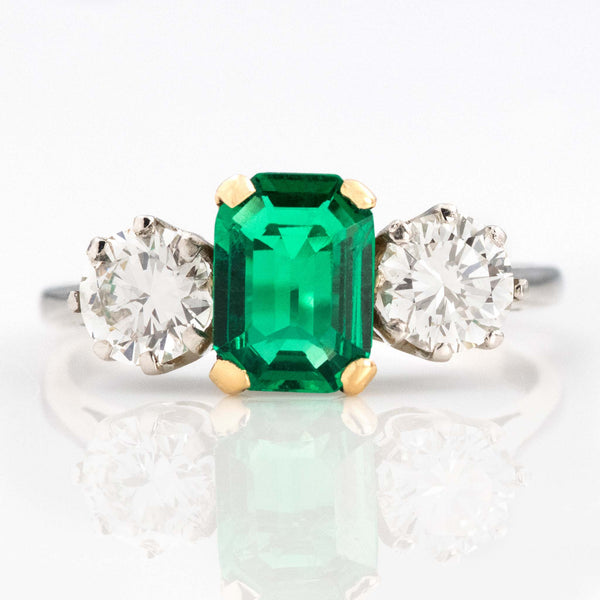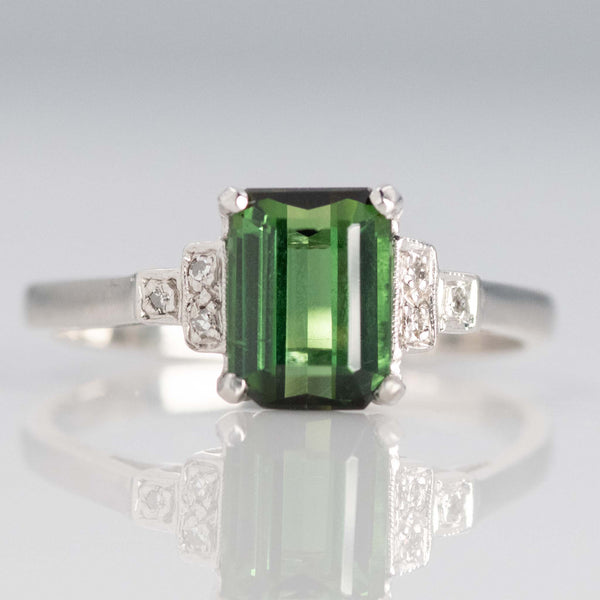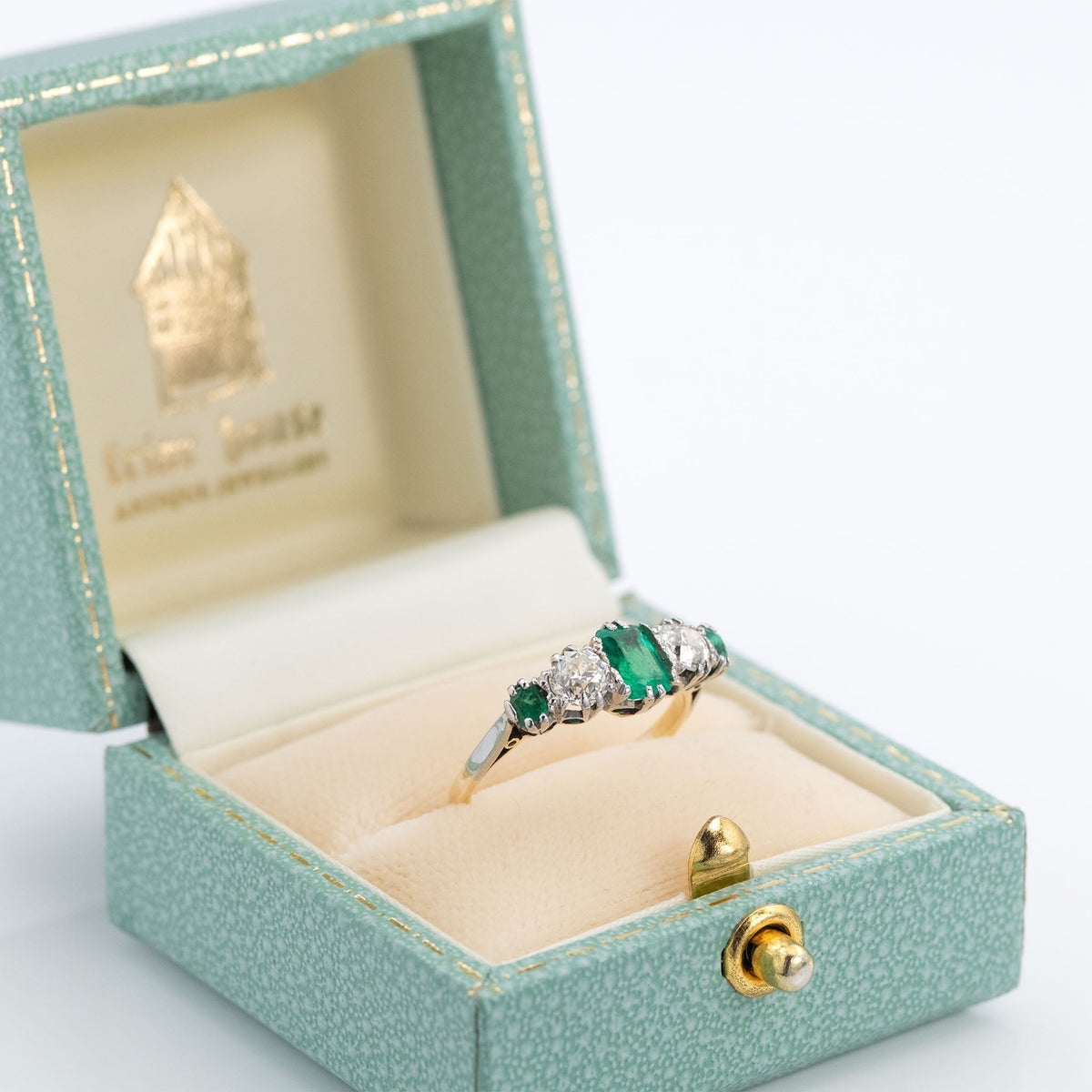
Emeralds have a particular pull. There's something about their deep, mossy green that catches the light differently to any other stone, and antique settings only add to the charm. If you're thinking about buying one, this antique emerald ring buying guide will walk you through the practical things worth knowing before you spend your money, from colour and clarity to cut, condition and value.
At Friar House, we handle antique and vintage emerald rings regularly, and buyers usually arrive with the same questions. What makes one emerald better than another? How do you know a ring is genuinely old rather than a modern reproduction? And is an antique emerald ring actually a sensible purchase, or just a pretty one? Let's take these in turn.
Understanding Emerald Colour and Clarity
Colour is the first thing most people notice, and it's the single biggest factor in an emerald's value. The most sought-after stones show a rich, even green with a slight blue undertone, sometimes described as "grass green" by gemmologists. Paler or overly yellow-green stones are generally considered lower quality, though they can still be attractive and more affordable.

Clarity works differently for emeralds than for diamonds. Almost every natural emerald contains some internal characteristics, often called "jardin" (French for garden) because they can look like tiny fronds or fissures under magnification. This is normal and expected, not necessarily a flaw to worry about. What matters is whether these inclusions affect the stone's durability or if they're purely cosmetic, sitting quietly beneath the surface.
When assessing vintage emerald ring quality, look at the stone in natural daylight rather than shop lighting, which can flatter colour. A reputable seller should be happy for you to view a ring this way, and should be transparent about any treatments the stone has had, since emeralds are commonly oil-treated to improve clarity.
Assessing Cut and Setting
Older emeralds were often cut by hand, without the precision tools available today. This means antique stones can show slight asymmetry or a less uniform shape than a modern equivalent. This isn't a fault; it's part of what gives an antique piece its character and helps confirm its age.

The classic emerald cut itself, with its stepped facets and rectangular shape, was actually developed partly because it suited the stone's tendency to fracture during cutting. You'll see this shape frequently in Georgian and Victorian pieces, though emeralds also appear as ovals, cushions and rounds depending on the period.
The setting tells its own story. Claw settings that cradle the stone gently, rather than gripping tightly, were typical of certain eras and can indicate age alongside hallmarks and metal composition. Look closely at the metalwork too. Fine, detailed engraving or millegrain edging (tiny beaded borders) often points to skilled craftsmanship from an earlier period, something harder to find in mass-produced modern jewellery.
How to Buy an Emerald Ring with Confidence
If you're wondering how to buy an emerald ring without worrying you've overpaid or been misled, the answer largely comes down to provenance and documentation. A trustworthy seller should provide clear information about the ring's age, origin and any certification for the stone.
Ask questions before you buy. Where was the ring sourced? Has the emerald been tested by a gemmologist? Is there a hallmark confirming the metal and, sometimes, the date? These details matter more than a persuasive description, and any specialist worth buying from will welcome the questions rather than deflect them.

It's also worth handling the ring in person if you can, or asking for detailed photographs and video if buying online. Look for wear consistent with age (soft, rounded edges rather than crisp modern lines), and check that the stone sits securely in its setting. If you're browsing our antique emerald rings collection, each piece comes with a description covering these points, so you know what you're looking at before making a decision.
What Affects Value and Investment Potential
Several factors combine to determine an antique emerald ring's value, and it helps to understand them before you start comparing prices. Colour and clarity matter most, as discussed, followed by carat weight, the quality of the setting, and the ring's overall condition and rarity.
Provenance can add meaningful value too. A ring with a documented history, an interesting hallmark, or ties to a particular period or maker will often command more interest than a similar stone in a generic setting.
Thinking about emerald ring investment is reasonable, but it's worth keeping expectations grounded. Antique jewellery can hold or increase in value over time, particularly fine natural emeralds with good colour and minimal treatment, but this shouldn't be the only reason to buy. Choose a ring you genuinely love wearing, and treat any value appreciation as a welcome bonus rather than a guarantee.
Common Mistakes to Avoid
A few missteps come up again and again with new buyers. Rushing the decision without proper natural-light viewing is one. Assuming heavy inclusions automatically mean poor quality is another, when in fact this is simply typical of the stone. Buying without asking about treatments or provenance is perhaps the most common error, since this information directly affects both value and how you should care for the ring.
It's also worth being cautious of vague or overly generic descriptions, particularly when shopping for antique emerald rings UK wide online. A specialist seller should be able to speak knowledgeably about a specific piece, not just repeat standard phrasing.
A Final Word
Choosing an antique emerald ring is as much about trusting the seller as it is about judging the stone itself. With a little knowledge of colour, clarity, cut and provenance, and a seller willing to answer your questions honestly, you can buy with real confidence. We hope this antique emerald ring buying guide has given you a solid, practical starting point for your search.
If you'd like to see genuine examples in person or online, browse our antique emerald rings collection at Friar House, where Victoria and the team are always happy to talk through any piece in detail.